inverse fair value gap IFVG guide for retail traders
Data as of 2026-10-17 23:59 UTC · Levels and zones: Znorva analysis engine
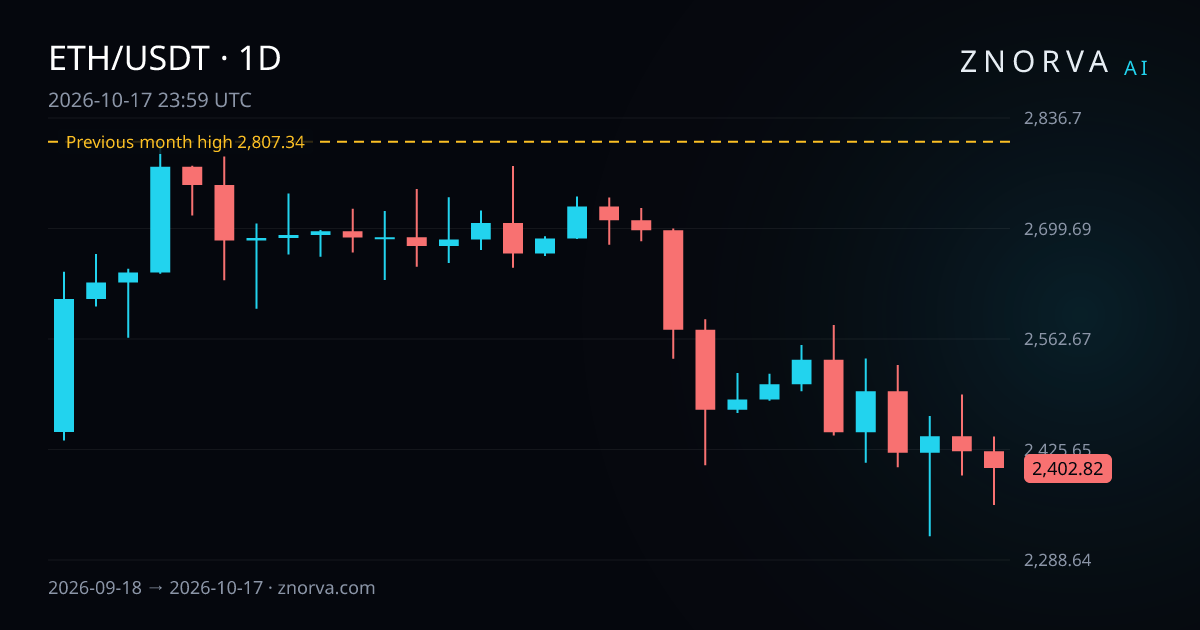
inverse fair value gap IFVG is a flipped fair value gap that traders use after a liquidity sweep and reclaim. This guide uses Znorva data stamped 2026-10-17 23:59 UTC and explains how the method identifies, filters, and tracks this setup.
What it is
A fair value gap is a fast move that leaves a visible imbalance on the chart. An inverse fair value gap IFVG appears when that old gap flips role after price sweeps a reference level and then reclaims it.
In the Znorva method, a reference level means a previous day, week, or month high or low. The reclaim is not a single fast move. It needs 2 completed closes back beyond the level. You can see that rule in the methodology.
Once that reclaim is in place, the old gap may stop acting the way it did before. In a short-side scenario, a gap that supported price can turn into resistance. In a long-side scenario, a gap that capped price can turn into support.
That is why traders pay attention to IFVGs. The pattern is not just "there is a gap." It is a sequence: liquidity sweep first, reclaim second, then a return into the flipped area.
How to spot it on a chart
Start with the nearest reference levels. Znorva focuses on calendar-based highs and lows, not random mid-session turning points.
Then look for this order:
- Price runs a reference level.
- The move creates a liquidity sweep.
- Price prints 2 completed closes back beyond that level.
- A fair value gap left by the move flips role.
- Price returns to that flipped area.
If the setup is short-side, the flipped gap often sits above current price after the reclaim. If the setup is long-side, the flipped gap often sits below current price after the reclaim.
A clean chart helps. Mark the sweep, the reclaim, and the flipped gap as separate events. Then check whether the area lines up with a demand zone or supply zone. That added structure can make the setup easier to read.
For related chart language, see Znorva's smart money concepts guide.
How Znorva AI uses it (the method)
Znorva does not treat every return area the same way. The engine ranks reference entry zones in this order: BPR, IFVG, then FVG. That means an IFVG matters, but it does not always get first priority.
The method is strict about sequence. First comes the liquidity sweep. Next comes the reclaim with 2 completed closes. Only then can a model setup become active at a reference price if price returns to the chosen area.
After activation, the model tracks 3 targets under fixed rules. Outcomes are recorded the same way each time. That matters because it separates chart structure from the final hypothetical model-tracked outcome.
This also shows why an IFVG is only one part of the method. The gap itself is not enough. The engine also checks the sweep, the reclaim, the zone priority, and alignment with the nearest reference levels. You can see that broader structure on Znorva's chart pages.
A real example from our data
A recent tracked case came from ETHUSDT in crypto futures on the 15m timeframe. It was a short-side scenario. The setup became active at a reference price of 2466.96 on 16 October 2026 and resolved under the model's rules on 18 October 2026 at 2421.66.
The outcome was a partial outcome: target 1 (TP1) reached, then the scenario resolved. The hypothetical model-tracked outcome measured 2.08 R. R is the distance between the reference entry and the model's stop level.
That single case is useful, but the broader record matters more. Over the last 60 days, the engine logged 24 resolved setups. Of those, 4 reached their final target, 7 had a partial outcome, and 13 resolved at the model's stop level.
The filtering before activation is also important. Over the last 30 days, 611 scenarios were invalidated before becoming active. That tells you the method rejects many ideas before they turn into tracked setups.
One of the nearest reference levels for Ethereum came from the daily timeframe: the previous month high at 2807.34. From the daily close of 2402.82 on 17 October 2026, that level was 16.84% above.
That context helps explain why reference levels matter even when the active setup is on 15m. The method can combine a lower-timeframe setup with a higher-timeframe reference level. If you follow crypto markets, the same framework appears across Znorva's crypto pages.
Common mistakes
The first mistake is treating any fair value gap as enough. In this method, the sweep and reclaim come first. Without them, the chart idea does not match the rule set.
The second mistake is ignoring the zone priority. Znorva does not jump to every flipped gap first. It checks BPR before IFVG, and IFVG before FVG.
The third mistake is looking only at target reached cases. In the last 60 days, 13 resolved setups reached the model's stop level. That is part of the record and part of the method.
The last mistake is forgetting how much gets filtered out. In the last 30 days, 611 scenarios were invalidated before becoming active. A selective method will often reject far more ideas than it tracks.
FAQ
Is inverse fair value gap IFVG bullish or bearish?
It can support either direction. What matters is whether the liquidity sweep and reclaim create a long-side or short-side scenario, and whether the flipped gap lines up with structure.
Can you use it on 15m and daily charts?
This article shows a 15m setup example and a daily reference level example. The key point is not one fixed timeframe. The key point is keeping the same sequence: sweep, reclaim, then return to the flipped area.
Why does Znorva AI wait for 2 closes?
The reclaim rule needs 2 completed closes back beyond the reference level. That helps the method avoid reacting to one fast move that does not hold.